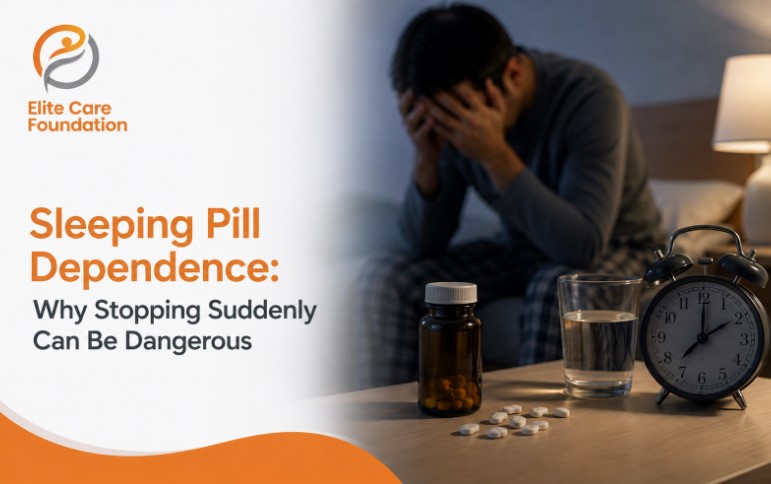
Sleeping pills can be helpful when prescribed for the right reason and reviewed regularly. Problems may develop when a person takes more than prescribed, continues for longer than planned, mixes tablets with alcohol, or feels unable to sleep without them. Dependence is not a sign of weak character. The body can adapt to some sedative medicines, making sudden withdrawal unsafe.
Tolerance, dependence and addiction are different
Tolerance means the same dose has less effect over time. Physical dependence means withdrawal symptoms may appear when the medicine is reduced or stopped. Addiction also involves impaired control and continued use despite harm. A person can become physically dependent while following a prescription, so the assessment must remain respectful and precise.
Benzodiazepines and some Z-drugs can cause rebound insomnia, anxiety, sweating, tremor, poor concentration and sensitivity to sound or light during withdrawal. Severe withdrawal can include confusion or seizures. The US National Institute on Drug Abuse advises that people dependent on central nervous system depressants should not try to stop on their own. Combining sedatives with alcohol or opioids can also suppress breathing and increase overdose risk.
Why medical review comes first
A doctor needs the exact medicine, dose, duration, timing and source. The review should also cover other prescriptions, alcohol use, breathing problems, falls, memory changes, pregnancy and mental health. Treatment commonly involves an individual, gradual reduction planned by a prescriber. There is no single taper that is safe for everyone, and the schedule may change according to symptoms.
A search for rehabilitation center Mumbai may produce many programmes, but sleeping-pill dependence requires access to medical assessment. Counselling alone cannot manage seizure risk. A centre should also be able to coordinate with the prescribing doctor and investigate why sleep became difficult in the first place.
Restoring sleep while reducing dependence
Treatment may include sleep scheduling, cognitive behavioural therapy for insomnia, relaxation skills, daytime activity and work on anxiety or depression. Families can help by storing medicines safely when the patient agrees, attending reviews and avoiding arguments at bedtime. They should not change the dose, hide tablets suddenly or substitute another sedative.
What makes a taper individual
The pace of reduction can depend on the medicine’s half-life, the current dose, the length of use, earlier withdrawal, age and other medical conditions. Tablets obtained from several doctors or without a prescription make planning more difficult, so complete and honest information is essential. Symptoms should be reviewed rather than endured in silence. A return of sleeplessness does not always mean the original condition has fully returned; it may be temporary rebound insomnia. The prescriber decides whether to pause, slow or otherwise adjust the plan. Alcohol is not a safe sleep substitute during this process.
Mumbai patients who work shifts or travel long hours need a plan that fits their real sleep window. Advice designed only for a nine-to-five routine may fail even when motivation is strong. Follow-up should review daytime drowsiness, driving safety, work errors and access to repeat prescriptions.
Reliable sleeping pills addiction treatment in India combines safe medical reduction with care for sleep and emotional health. Severe confusion, a seizure, very slow breathing or inability to wake requires immediate emergency help through 112 or the nearest emergency department. Early assessment is safer than waiting for the medicine supply to run out.